
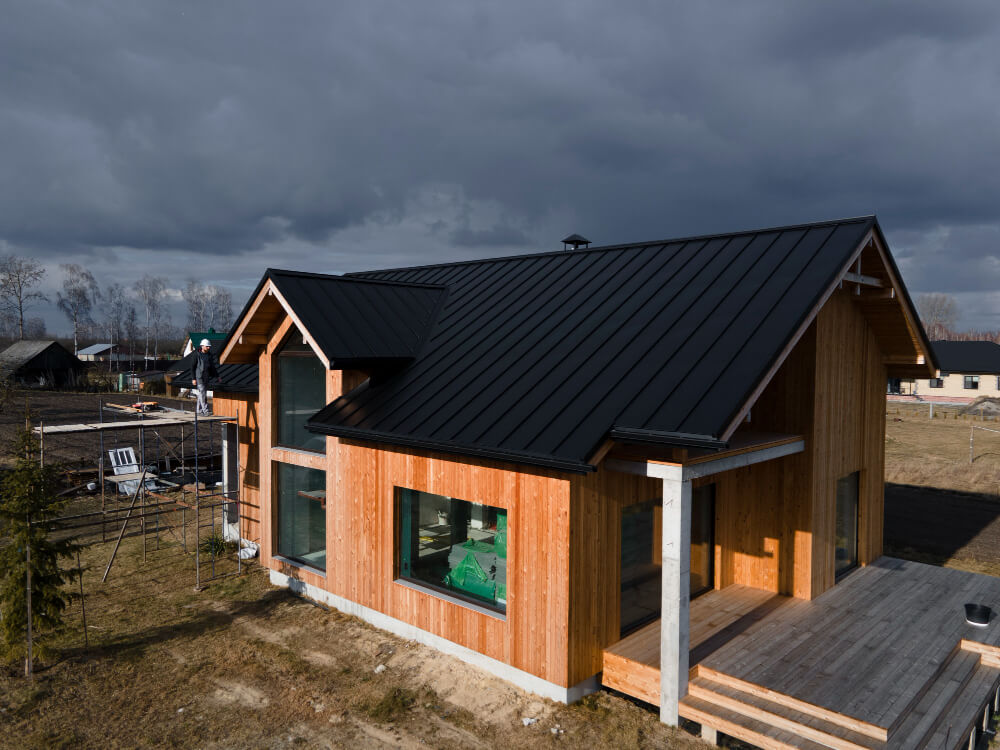
In 2025, most homeowners spend between $18,000 and $65,000 to replace the roof on a 3,000 sq. ft. house. Premium systems like tile or slate can exceed $80,000 in high-cost markets. Your final total depends on material, roof complexity, region, and code requirements.
Key Factors That Influence Cost
Roof Area vs. Living Area
Interior square footage doesn’t equal roof surface. Roofers price by “squares” (1 square = 100 sq. ft.). A 3,000 sq. ft. home commonly has a roof area of about 3,400–4,800 sq. ft. due to pitch, overhangs, dormers, and valleys—roughly 34–48 squares, with complex, multi-level roofs reaching 60+ squares. Expect 10–25% material waste for cuts and layout.
Material Selection
Material choice drives both cost and longevity. 2025 pricing reflects modest increases from supply and labor conditions. Installed price ranges below include materials, typical accessories, and standard labor:
- Basic Asphalt Shingles: $3.50–$5.75 per sq. ft. (≈ $14,000–$23,000 on ~4,000 sq. ft.).
- Architectural Asphalt: $4.50–$7.50 per sq. ft. (≈ $18,000–$30,000).
- Metal (corrugated/standing seam): $8.00–$13.00 per sq. ft. (≈ $32,000–$52,000).
- Wood Shakes/Cedar: $7.00–$10.00 per sq. ft. (≈ $28,000–$40,000).
- Tile or Slate: $11.00–$22.00 per sq. ft. (≈ $44,000–$88,000; may need structural checks).
- Synthetics/Composites: $6.00–$12.00 per sq. ft. (≈ $24,000–$48,000).
Cool-roof and recycled-content products are increasingly popular and may qualify for local rebates or federal credits.
Labor and Installation
Labor typically represents 30–50% of the bill. Crews often charge $2.50–$5.50 per sq. ft., varying with pitch, story count, access, and complexity. A ~4,000 sq. ft. roof generally takes a 5–7 person crew about 4–8 working days. Steeper slopes and added safety gear can add $800–$1,600.
Location and Codes
Regional wages, permit fees, and code requirements matter. Estimated 2025 asphalt ranges for a ~4,000 sq. ft. roof:
- South: $15,000–$26,000
- Midwest: $17,000–$31,000
- Northeast: $19,000–$38,000
- West Coast: $21,000–$41,000
Permits usually run $250–$1,200. Coastal or high-wind areas may require specific underlayments and fasteners.
Common Add-Ons
- Tear-Off & Disposal: $1.50–$3.50 per sq. ft. (≈ $6,000–$14,000 on ~4,000 sq. ft.).
- Underlayment, Flashing, Deck Repair: $1.50–$2.50 per sq. ft. (≈ $6,000–$10,000).
- Ventilation & Insulation Upgrades: $800–$3,500.
- Structural Work: $2,000–$8,000+ if rot is found or heavy materials need reinforcement.
- Warranties/Upgrades: $300–$800 for enhanced manufacturer coverage.
- Custom Features: Skylights, solar prep, or complex details can add 10–15%.
Typical Cost Ranges in 2025
Assuming a ~4,000 sq. ft. roof, moderate complexity, and U.S. averages:
- Budget (Basic Asphalt): $18,000–$28,000
- Mid-Tier (Architectural Asphalt or Entry Metal): $28,000–$45,000
- Premium (Standing Seam Metal, Tile, or Slate): $45,000–$75,000+
Quick estimate method: Find roof squares (roof area ÷ 100). Multiply by an installed rate per square (e.g., 40 squares × $700 = $28,000). Add 15–25% for tear-off, permits, and contingencies.
Check out our roof cost calculator to calculate the accurate cost.
Sample Cost Scenarios (40 Squares)
Scenario A: Basic Asphalt
- Shingle materials: $8,600
- Installation labor: $11,600
- Tear-off and disposal: $6,400
- Permits/inspections: $750
- Weatherproofing and vents: $2,200
Total: $29,550
Scenario B: Architectural Asphalt (Mid-Tier)
- Materials (architectural shingles): $14,800
- Installation labor: $13,600
- Tear-off and disposal: $6,800
- Permits/inspections: $900
- Extras (ice & water shield, added ventilation): $3,200
Total: $39,300
Scenario C: Premium Tile
- Tile materials: $31,200
- Installation labor: $18,000
- Tear-off and disposal: $8,800
- Engineering/permits: $1,400
- Structural reinforcement: $6,000
- Accessories (flashing, ridge, underlayment): $4,200
Total: $69,600
Add $3,000–$5,000 for steep slopes, intricate valleys, or difficult access.
Pros and Cons of Roofing Materials
Asphalt Shingles
Pros: Affordable, fast installation, broad color choices. Cons: 20–30 year life, less impact resistance than metal or tile.
Metal Roofing
Pros: 40–70 year life, fire-resistant, reflective for energy savings. Cons: Higher upfront cost, potential rain noise without sound-dampening layers.
Tile or Slate
Pros: Exceptional longevity and curb appeal. Cons: Heavy, may require structural reinforcement, expensive to repair.
Wood Shakes
Pros: Natural look, decent insulation value. Cons: Maintenance-intensive, fire risk if untreated, may be restricted by local codes.
Synthetic/Composite
Pros: Lighter than natural slate/tile, consistent quality, good durability. Cons: Pricing and performance vary by brand; shorter track records for some products.
Financing Your Roof
- HELOC/Home Equity Loan: Often 6–8% APR in 2025; interest may be tax-deductible in some cases.
- Personal Loan: Unsecured, typically 7–12% APR with quick approvals.
- FHA 203(k) Limited: Government-backed option bundling renovations up to $35,000.
- PACE (where available): Finance eligible energy upgrades via property taxes.
- Contractor/Manufacturer Promotions: Sometimes 0% for 12–24 months.
- Tax Credits/Rebates: Up to $600 federal credit for qualifying energy-efficient roofs; check local utility incentives.
Choosing a Contractor
- Confirm license, general liability, and workers’ compensation.
- Request detailed written estimates (brand/line, underlayment, ventilation, cleanup plan).
- Compare at least three bids and review recent local references.
- Check reviews on BBB, Angi, and Google; verify warranty handling.
- Clarify timeline, permit responsibility, and payment milestones.
Ways to Save
- Schedule during off-peak seasons (late fall/winter) for potential 5–15% discounts.
- Ask for per-square pricing to compare bids apples-to-apples.
- Select products with rebates (cool-roof shingles, reflective metal) and stack incentives.
- Maintain gutters and address small leaks early to extend roof life.
- Avoid second-layer overlays unless code-compliant and deck is sound.
- Bundle soffit, fascia, or insulation work for better overall pricing.
When to Replace
- Curling, cracked, or missing shingles.
- Granules in gutters, widespread bald spots, or UV damage.
- Persistent leaks, attic moisture, or daylight through the roof deck.
- Sagging or soft spots in the decking.
- End-of-life expectancy (asphalt 20–30 years, metal 40–70, tile/slate 50+).
Frequently Asked Questions
What’s the least expensive way to re-roof a 3,000 sq. ft. house?
Basic asphalt shingles are the most budget-friendly. For a ~4,000 sq. ft. roof, many 2025 projects land between $18,000 and $28,000 with standard tear-off and minimal extras.
How long does a roof replacement take?
Plan on 3–7 days depending on complexity, material, crew size, and weather. Simple single-story asphalt installs finish faster than heavy tile or steep multi-level roofs.
Does homeowners insurance cover roof replacement?
Policies typically cover sudden, accidental damage (hail, wind, fallen trees) but not age-related wear. You’ll pay your deductible (often $500–$2,000), and older roofs may be settled at depreciated value. Document damage and file promptly.
Is DIY roof replacement recommended?
Generally, no. Roofing requires safety training, specialized tools, and code knowledge. Mistakes can void warranties and lead to leaks. Hiring a licensed, insured roofer is usually the best value.
Final Takeaway
Expect to invest $18,000–$65,000 for a full roof replacement on a 3,000 sq. ft. home in 2025, with premium materials costing more. Choose materials suited to your climate and aesthetic, gather multiple detailed bids, and plan for contingencies. For a precise number, schedule an on-site measurement and consider using a roofing cost calculator to validate your budget.